The regulations every leisure venue works to.
Leisure assets carry the standard non-domestic regulatory stack and then a licensing-specific overlay on top. The Licensing Act 2003 bakes fire safety conditions directly into the premises licence, which means a fire-door failure can trigger a licence review by the responsible authorities rather than an FSO notice alone. The commercial consequence is closure of trade, not just a non-compliance letter.
Fire Safety Order 2005
Article 8 imposes the Responsible Person duty across every non-domestic part of a leisure venue, including the auditorium, the bar, the front-of-house, the dressing rooms, the projection booth, the gym floor, and the kitchen. Article 9 requires a documented fire risk assessment, reviewed regularly, sized to the occupancy capacity of the venue at its peak audience.
Licensing Act 2003 (premises licence)
The leisure-specific overlay. Premises licences for entertainment, late-night refreshment, and the sale of alcohol have fire safety conditions written into them. The responsible authority for fire safety can request a licence review on the basis of fire door non-compliance, which puts continued trading at risk in a way no other sector experiences quite as directly.
Workplace (Health, Safety and Welfare) Regulations 1992
Sets the workplace standards for means of escape, signage, lighting, and the maintenance of safe routes. In a leisure venue this overlaps every corridor the audience uses, every staff route behind the scenes, and the fire-rated egress doors that connect them. Fire door condition is squarely inside this regulation.
Health and Safety at Work Act 1974
The parent legislation. Section 3 imposes a duty on every employer and self-employed person to conduct their undertaking without exposing third parties to risk. In leisure that third party is the customer, and the customer count at full capacity can exceed the staff count by a hundred to one.
BS 9999:2017
Code of practice for fire safety in design and management of buildings. The framework that occupancy load factors, travel-distance modelling, and evacuation strategy for places of assembly are built against. The audience capacity for a venue is calculated using BS 9999 methodology, and the fire doors on the egress route are the structural elements that capacity number depends on.
BS 8214
Code of practice for fire door assemblies. The technical inspection standard DoorTRACE checklists follow as default, and the methodology competent inspectors apply across the full leisure estate: auditoriums, dressing rooms, kitchens, bars, gym floors, plant rooms, and the projection or stage areas the audience never sees.
Built for the way leisure actually trades.
DoorTRACE configures around the leisure reality: high audience occupancy, evening-trade access windows, the stage and back-of-house compartmentation lines the audience never sees, and the Licensing Act overlay that makes premises-licence evidence as important as FSO evidence.
Inspection cycles aligned to performance and trading schedules.
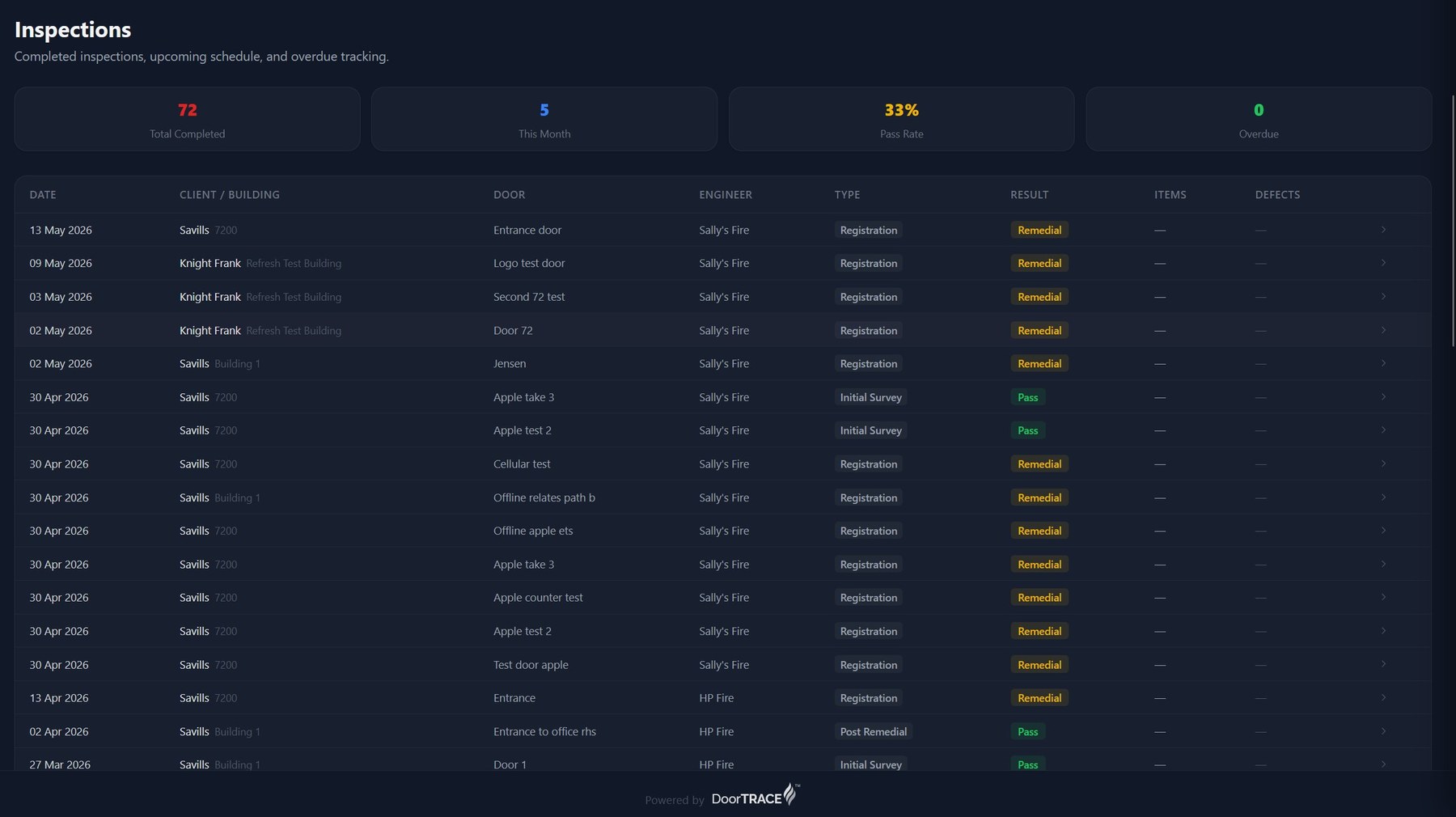
Inspection cadence configured per zone, per access window, per show. Auditorium doors on dark-night windows. Bar and front-of-house doors on morning prep slots. Stage and back-of-house on technical-rehearsal windows or pre-load-in mornings. Run-of-show events suspended automatically. The Venue Operations Director sees every zone from one screen, with the owning group seeing the rolled-up multi-venue view in their portal.
An engineer app that respects the show.
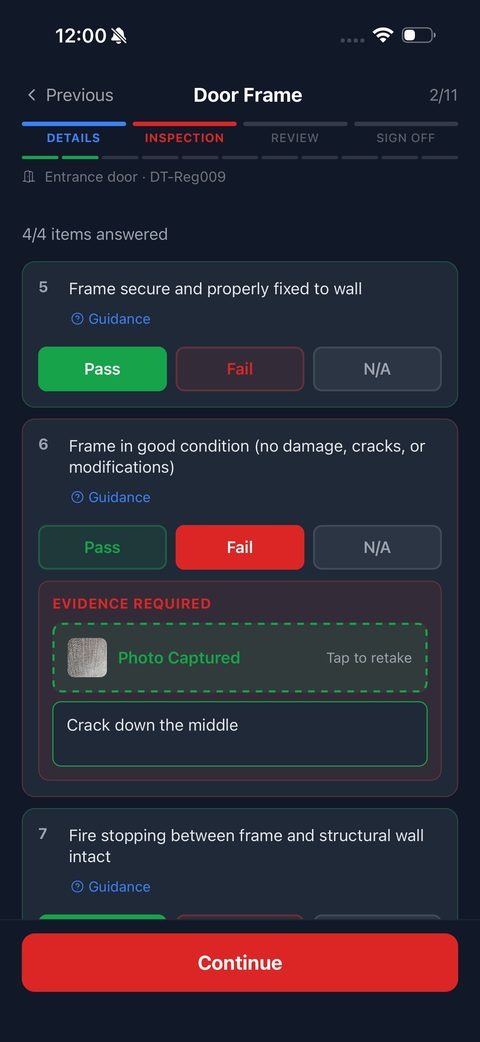
Engineers see the operational protocol before they arrive: stage door check-in, production manager liaison, blackout-zone proximity, comms channel for backstage zones. They can defer if a zone is in active technical rehearsal or load-in, photograph the timestamped reason, and the venue manager routes the rebook with the right notice. The audit trail evidences the operator's reasonable steps under the FSO without ever delaying a show.
A plaque every duty manager, contractor, and event-hire client can scan.
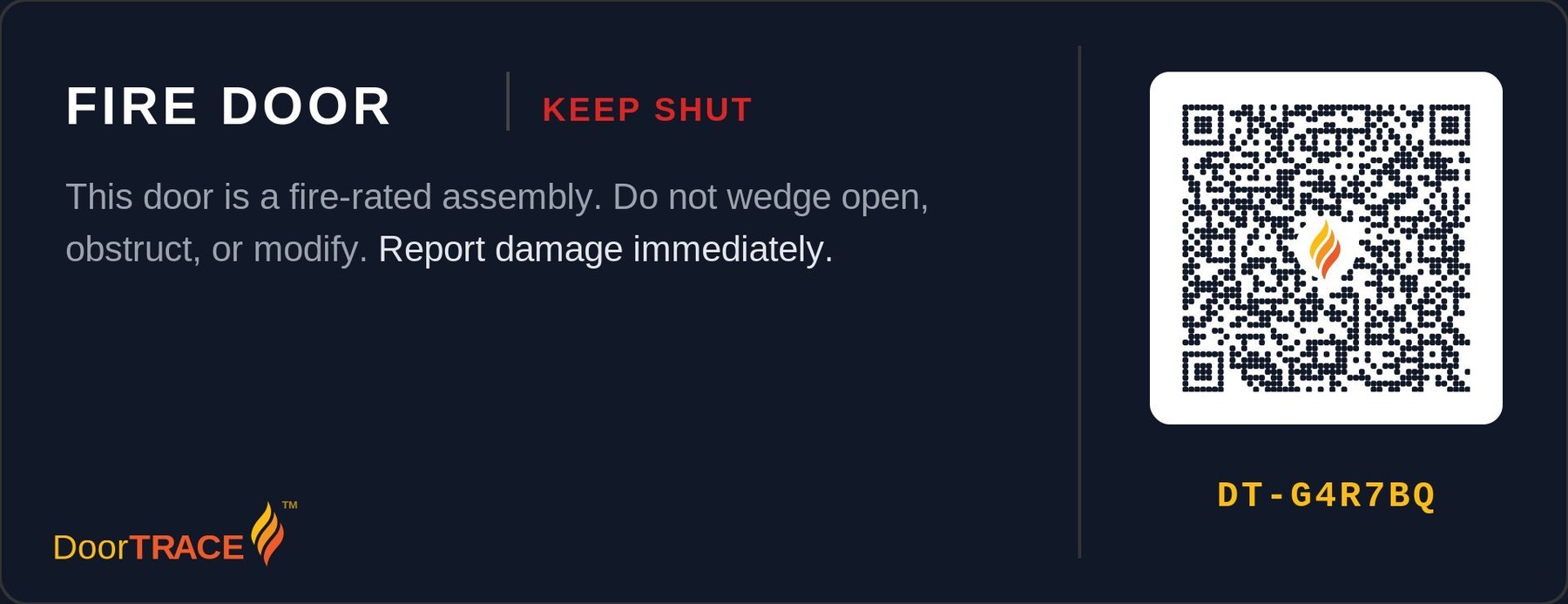
Every fire door across the venue carries a QR plaque, including the auditorium egress doors, the stage compartment-line doors, the back-of-house service corridor doors, and the dressing-room doors that get propped during quick changes. Duty managers, stage crew, hire-event contractors, and the visiting licensing officer can verify a door's compliance from their own phone in seconds. Plaques survive load-in damage, painted scenery, and twenty years of stage traffic.
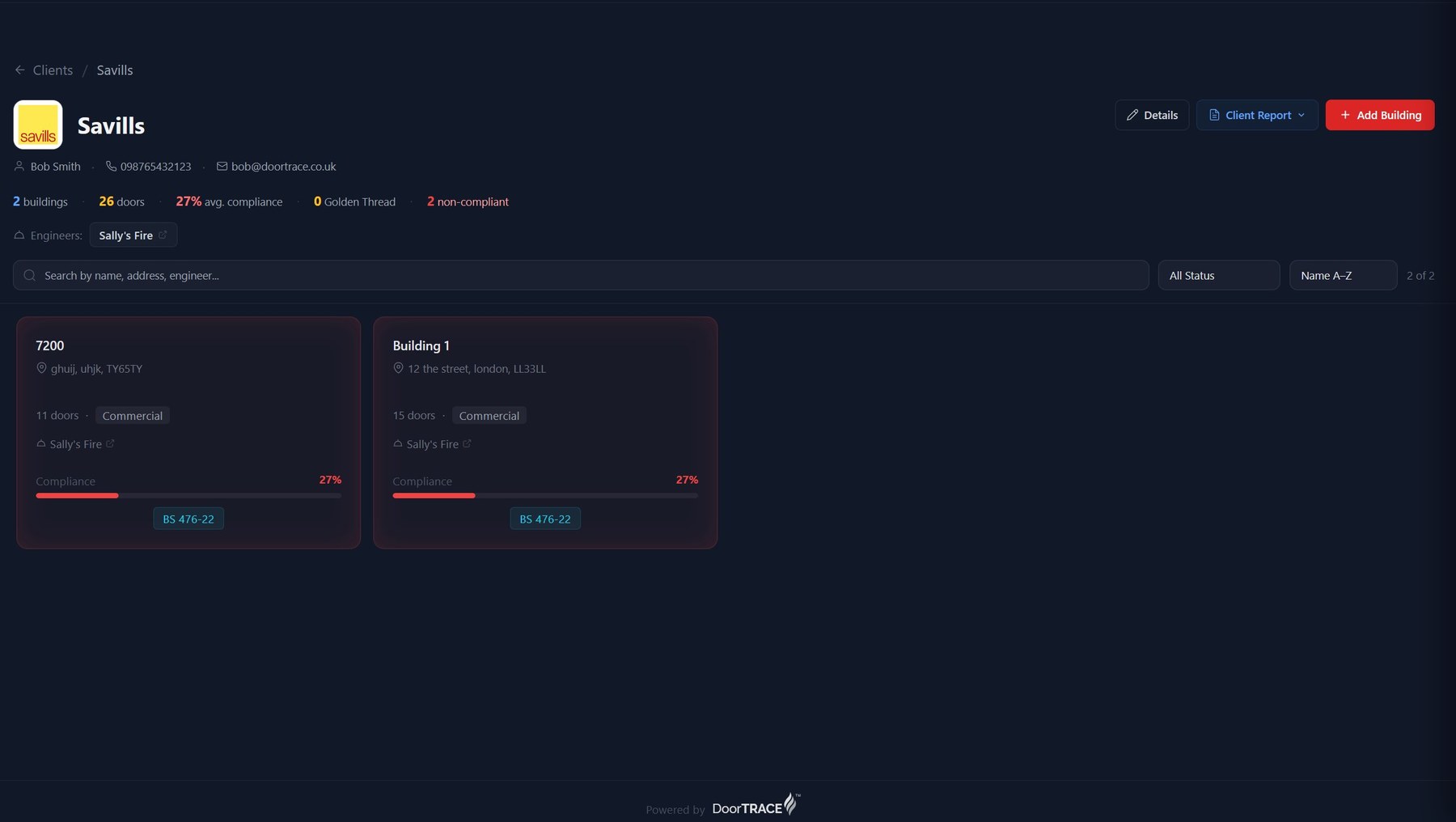
Eighty cinemas, one operations committee pack.
Compliance status by venue, by venue manager, by licence type, by capital plan line. Drill into any venue for compartmentation history, open defects, and the premises-licence evidence pack a responsible authority might request. Export an operations committee report in two clicks, a multi-venue portfolio pack in five minutes, a licensing-review evidence file in fifteen. The reporting cadence the owning group runs, in the format the licensing committee already expects.
The UK leisure market, in fire door terms.
A weekend at a live-music venue.
It is 14:00 on a Friday afternoon. The Operations Director at a 1,900-capacity Grade II listed live-music venue in central Manchester, with a sold-out indie headliner tonight and a corporate Christmas hire on Sunday, opens DoorTRACE before the bar team arrives for set-up.
Pre-show sweep across front-of-house, evacuation corridors, and back-of-house. The engineer logs two fire doors in the upper circle propped open from afternoon cleaning, one fly-tower access door wedged, one dressing-room door with a damaged self-closer from the previous run. Photos timestamped to the show day. Non-compliance notices fire to the duty manager with a ninety-minute rectification deadline before doors open. Auto-copied to the licensing officer link.
Post-show shutdown sweep. Stage area, dressing rooms, backstage corridors, equipment lifts. Three fire doors logged with impact damage from event rigging contact during load-out. Photos timestamped to the shift. Defects raised with remedial deadline locked to the next show in thirty-six hours. The Operations Director sees the rectification queue auto-prioritised against the weekend programme.
Corporate Christmas hire arrives for set-up. The client wants to bring in a stage extension and a temporary marquee link to the smoking terrace. The Operations Director pulls the compartmentation plan from DoorTRACE, verifies the proposed extension does not breach the fire strategy, and signs off the alterations consent with the audit reference attached before the hire build-in starts.
Weekly review with the venue group ownership across three Northern venues. Compliance status by venue, top defect categories by venue cohort, contractor performance against the event-hire access constraint, and the licence-review preparedness pack for the council annual venue audit in February. Pack rolls up by venue, by licence type, by quarter, ready for the licensing committee on request.