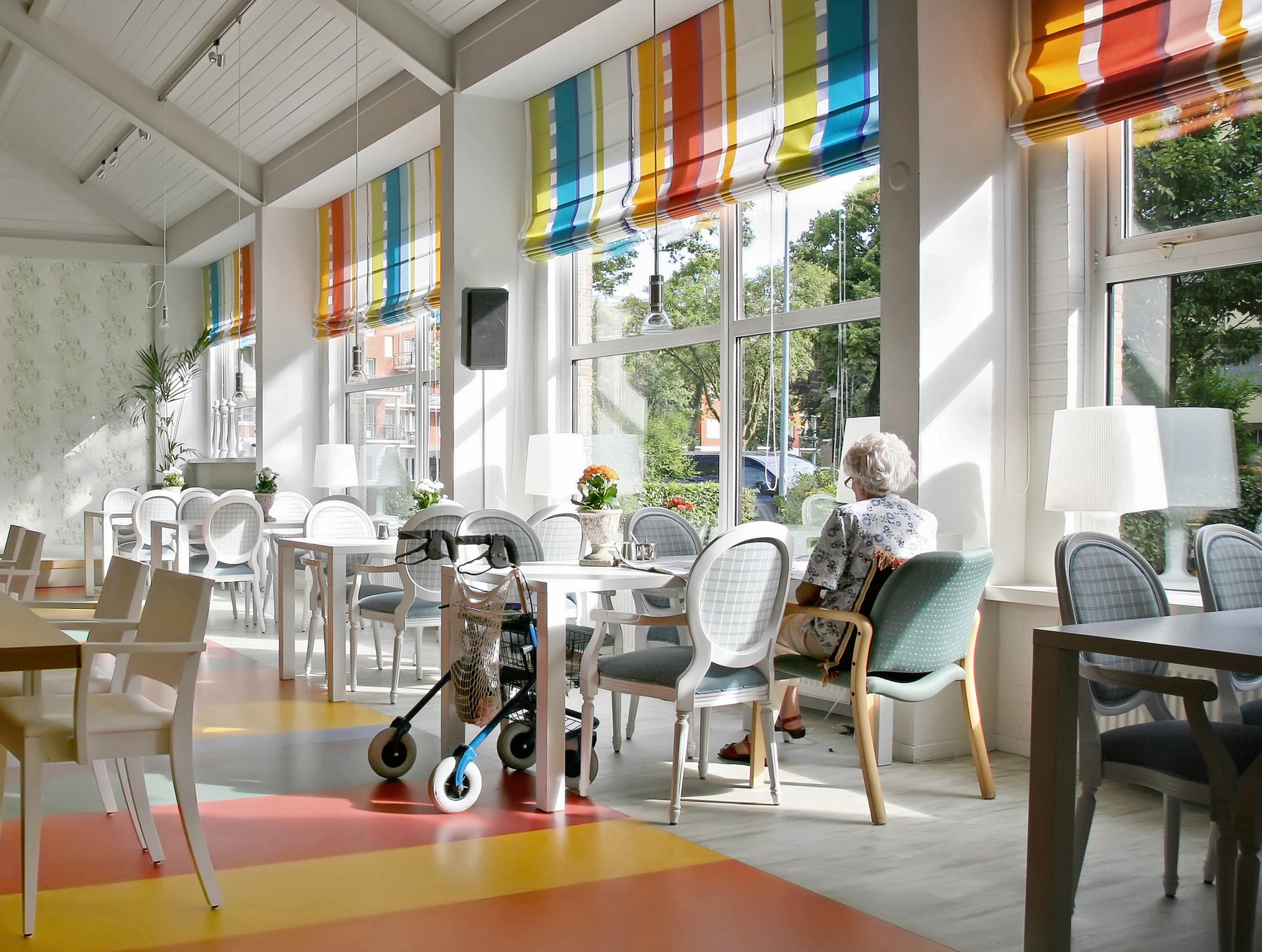
The regulations every care home operator works to.
Care homes are non-domestic premises housing some of the most vulnerable residents in the country. The Fire Safety Order is the legal floor; the CQC fundamental standards and the Care Act sit on top. Here is what sits behind every unannounced inspection.
Fire Safety Order 2005
Article 8 imposes a duty on the Responsible Person to take general fire precautions across all non-domestic parts of the care home. The Registered Manager or the home's owner is typically the legally accountable RP.
CQC Regulation 12
Safe care and treatment, including doing all that is reasonably practicable to mitigate fire risk. Fire door condition and compartmentation are squarely inside this regulation, and a failure here is a safety finding the CQC publishes.
CQC Regulation 15
Premises and equipment must be safe, suitable, and properly maintained. Fire doors, closers, seals, and evacuation routes all live under this regulation, and the evidence the CQC asks for is documented inspection and maintenance.
Health and Social Care Act 2008
The parent legislation behind CQC registration and the Regulated Activities Regulations 2014. Operating a care home without compliant fire safety is operating outside the conditions of registration.
BS 9999:2017
Code of practice for fire safety design and management. The framework BS 8214 inspection routines reference for door performance, hardware specification, and operational fire safety in residential care settings.
BS 8214
Code of practice for fire door assemblies. The technical inspection standard DoorTRACE checklists follow as default, and the methodology competent inspectors apply across care homes UK-wide.
Built around how care homes actually operate.
DoorTRACE configures around the care home reality: vulnerable residents, thin estates teams, unannounced CQC visits, and an evacuation strategy that depends on every compartment holding.
Inspection cycles that respect the care plan.
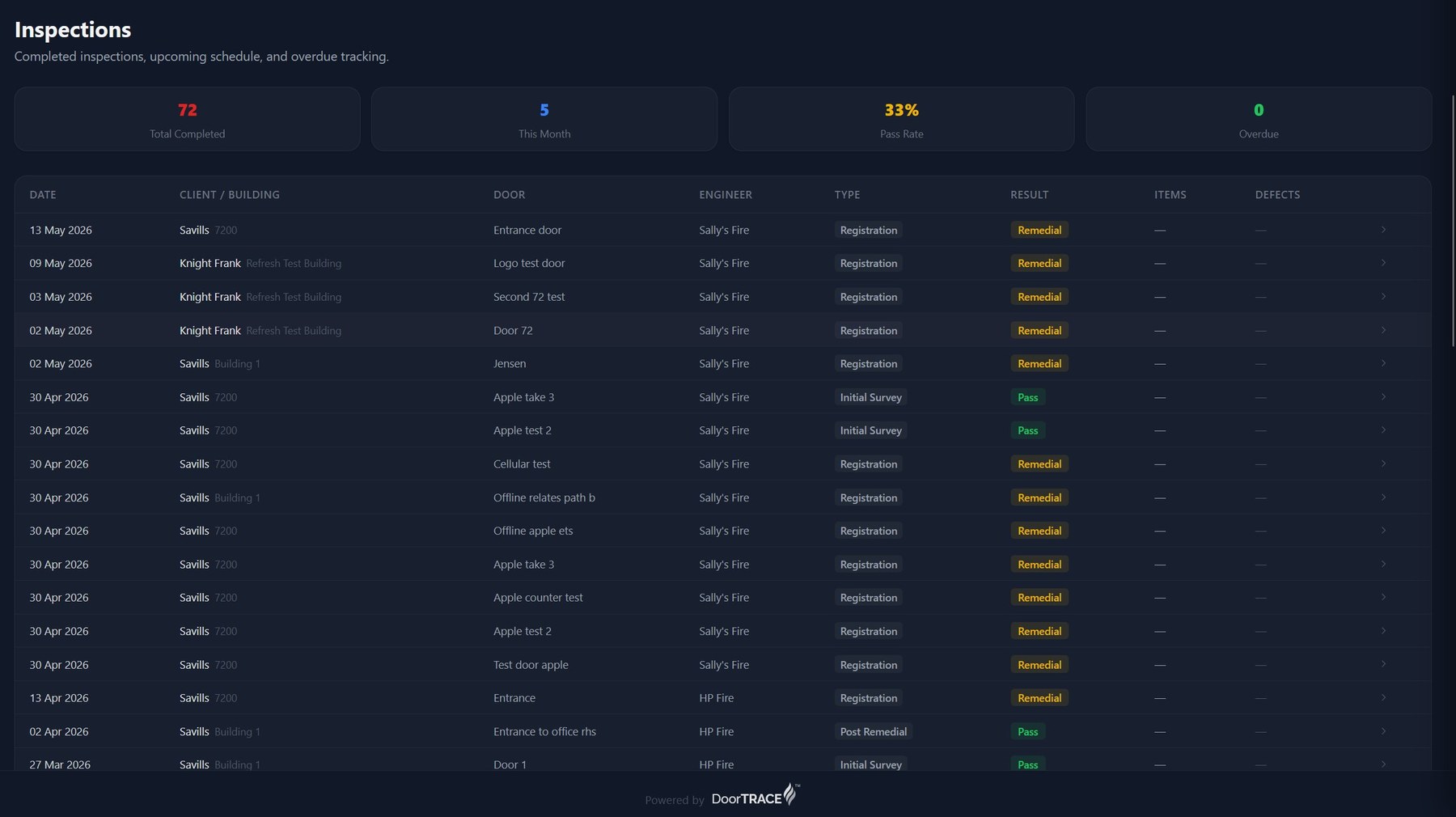
Inspection cadence configured per home and per zone: communal areas, kitchens, lounges, resident corridors, end-of-life suites. Each zone carries its own access notes. The Regional Operations Director sees cycle status across every home in the group from a single screen, with overdue inspections flagged before they show up as a CQC finding.
An engineer app that understands resident dignity.
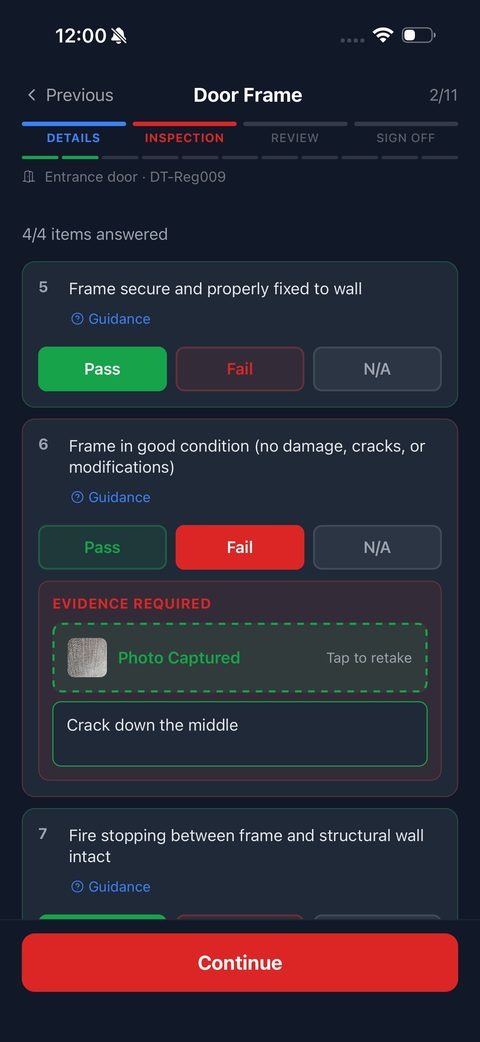
Engineers see room-by-room access notes before they arrive: residents with dementia, end-of-life care plans, family visiting hours, sensory-sensitive residents. They can defer an inspection at a resident's request, log it with reason, and the care manager re-books at a calmer time. The audit trail shows reasonable steps were taken, which is exactly what the CQC fundamental standards require.
A plaque every CQC inspector can scan.
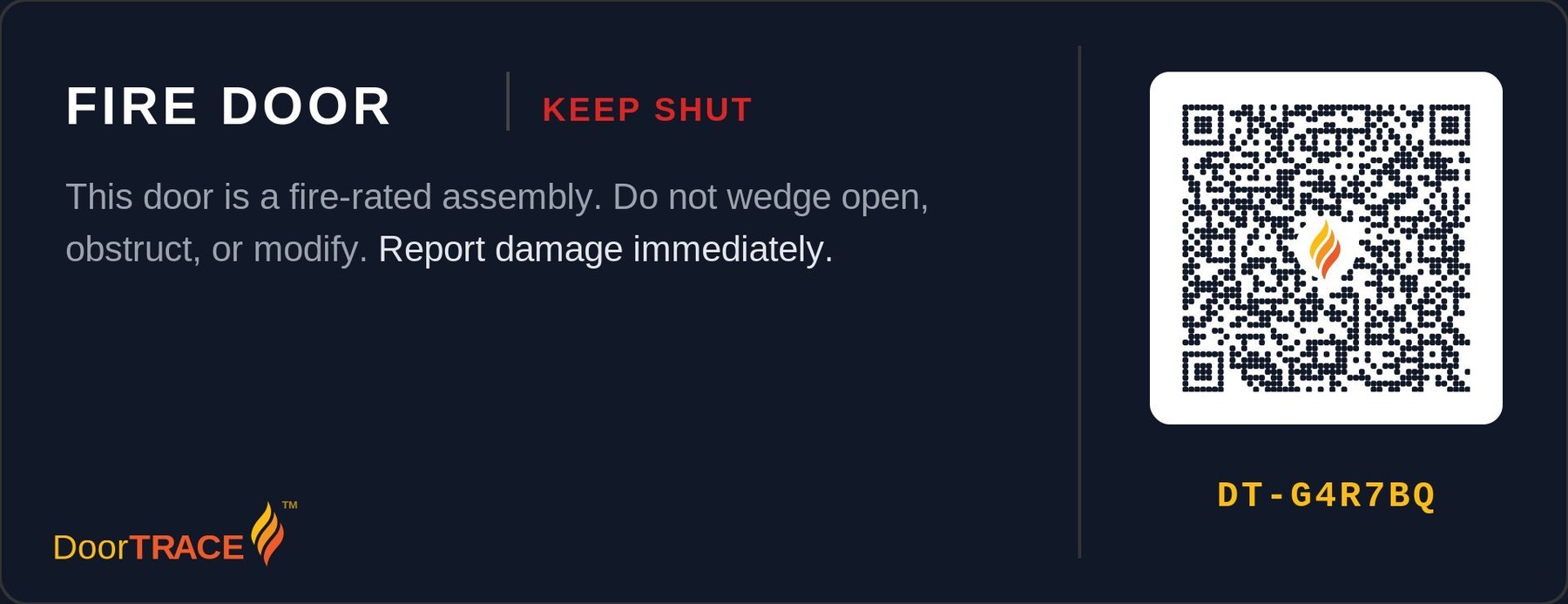
Every fire door carries a QR plaque. CQC inspectors, fire authority officers, and the Registered Manager can verify a door's compliance from their own phone in seconds. Plaques survive cleaning regimes, daily corridor traffic, and the occasional moving van during a resident's admission. They also link the right inspection record to the right physical door, every time.
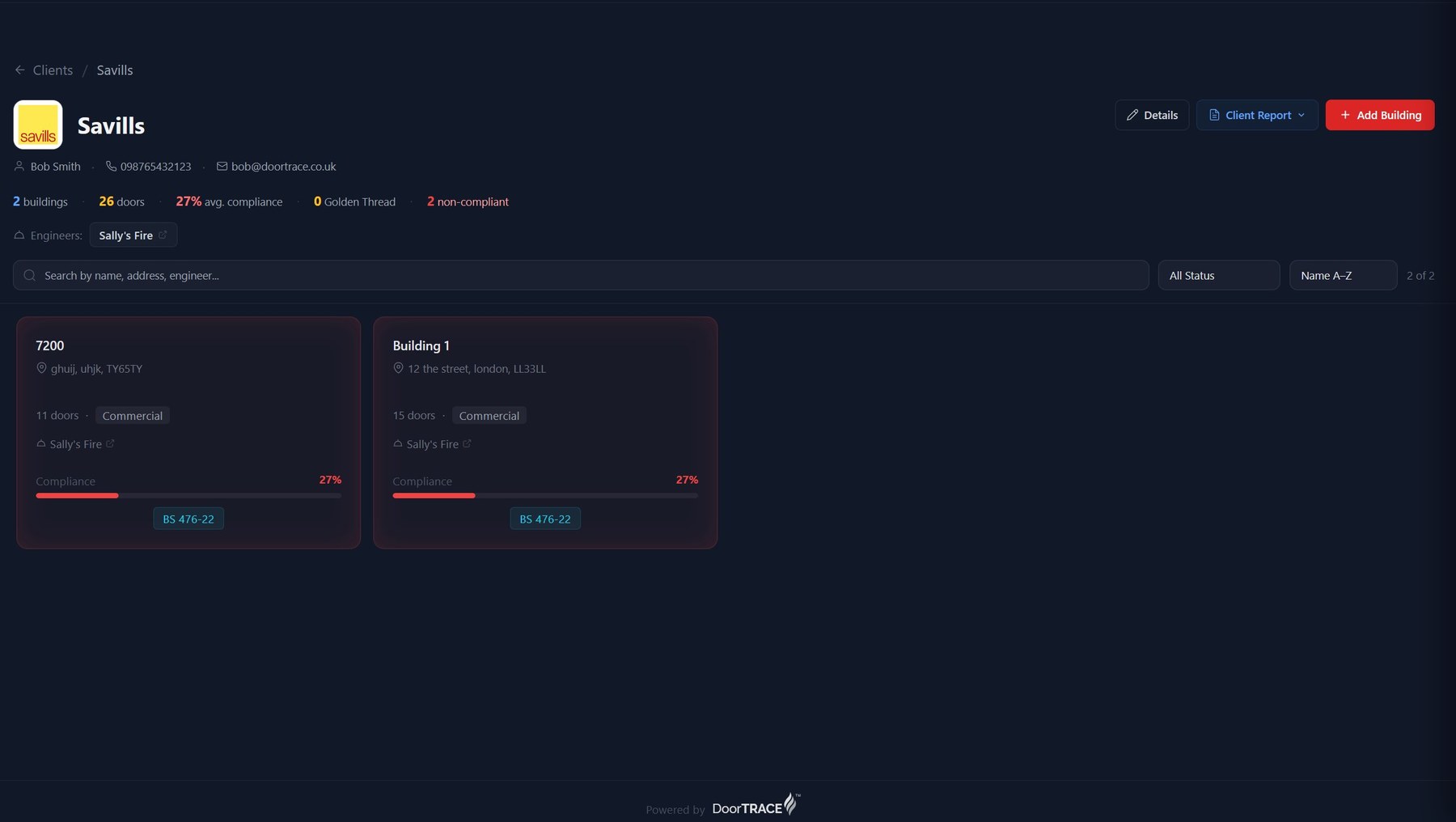
Fourteen homes, one CQC-ready record.
Home-by-home compliance status, by region, by registered manager, by CQC rating tier. Drill into any home for door-by-door history, evacuation strategy notes, open defects, and resident-access deferrals. Export a CQC inspection evidence pack in two clicks. Pull a Board-of-Directors compliance summary across the group in under five minutes.
The UK care home sector, in fire door terms.
A week in the life of a care group regional operations director.
It is 09:00 on a Monday. The Regional Operations Director of a fourteen-home care group opens DoorTRACE after hearing that a CQC inspector visited a competitor\'s home in the same area on Friday.
She pulls the last twelve months of fire door evidence for the Yorkshire home: every inspection, every defect, every remedial photo. Two outstanding defects, both with remedial work booked. She briefs the Registered Manager by phone and books an engineer to complete and sign off the repairs by Wednesday.
The engineer flags a damaged smoke seal on the door between the dementia unit and the main corridor. Photo logged, defect routed to procurement for a seven-day replacement. The Registered Manager and Clinical Lead are auto-copied; the defect is added to the home's morning safety handover board.
A CQC inspector arrives at the Yorkshire home, unannounced. The Registered Manager pulls the full fire door evidence on a tablet: every door, every inspection, every defect, every photograph. The inspector tours the home and spot-scans a QR plaque on a stair-core door; the inspection log surfaces with photographs. The visit closes without compliance findings.
Friday operations meeting. Portfolio compliance percentages across all fourteen homes, the Yorkshire CQC visit summary, top five open defects, and contractor performance by home. Pack auto-generated, shared with the Managing Director and the Board representative ahead of Monday.