Public Sector Build Journal has published a new article by our Managing Director, Kemble Nagan, on how to specify a fire door that is still compliant years after handover. The piece went out to PSBJ's readership of architects, contractors, local authorities and heads of site, and lands in the magazine's newsletter to more than 38,000 subscribers.
The doorset, not the door
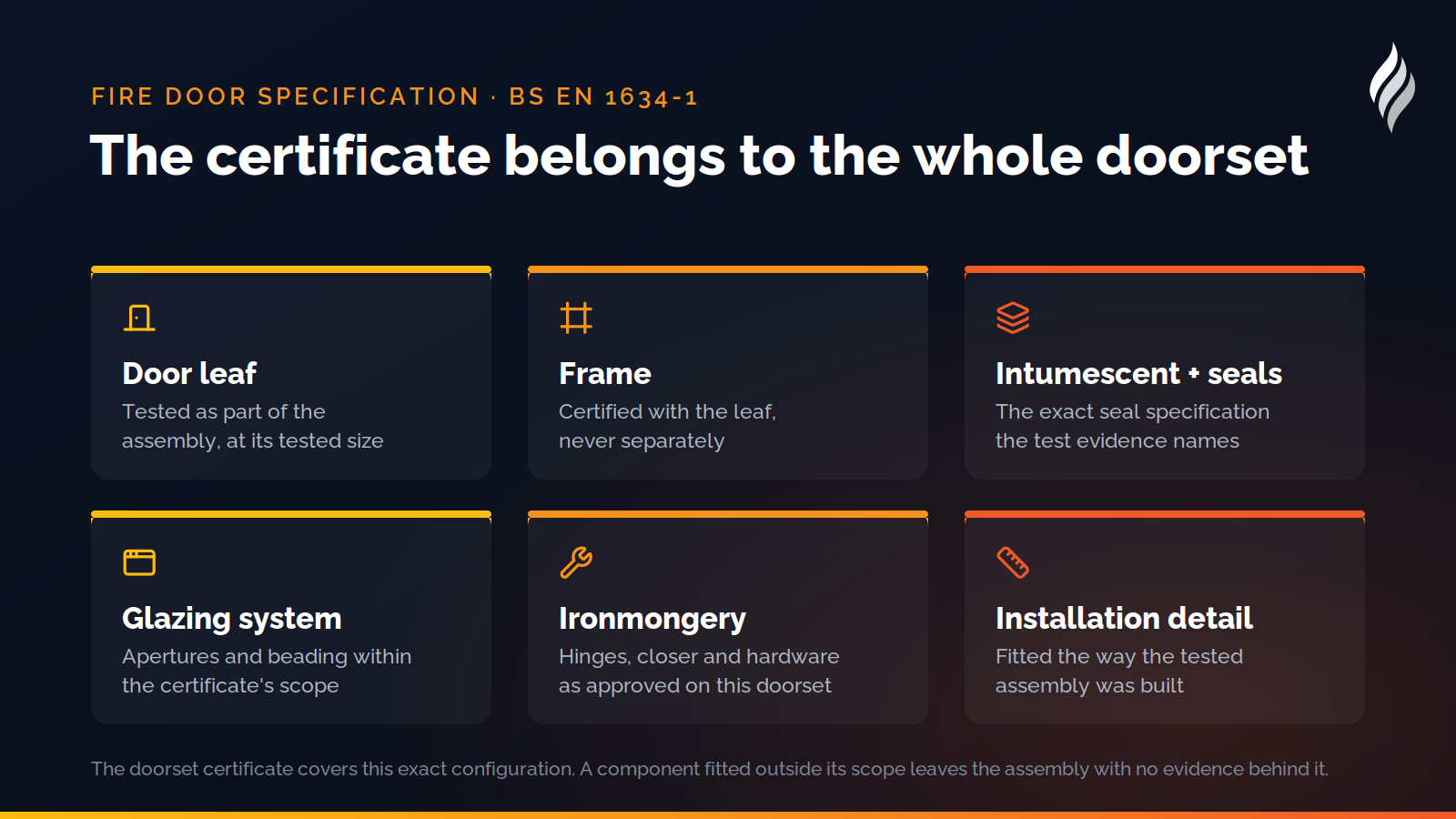
Specifying a Fire Door That Stays Compliant walks the compliance problem back to decisions made long before an inspector ever reaches the door. A fire door earns its rating as a complete doorset: the leaf, the frame, the intumescent and smoke seals, the glazing system and the ironmongery, tested together as one assembly to BS EN 1634-1. The certificate describes that exact configuration, and third-party certification schemes tie the paperwork to the product.
The article looks at how ordinary decisions quietly undo that evidence: value engineering that swaps a certified component for a cheaper one outside the certificate's scope, a leaf trimmed beyond the permitted reduction, a letter plate cut in after delivery. None of these look like fire safety decisions at the time, and every one of them can leave the assembly on the wall with no evidence behind it.
The 2029 switchover
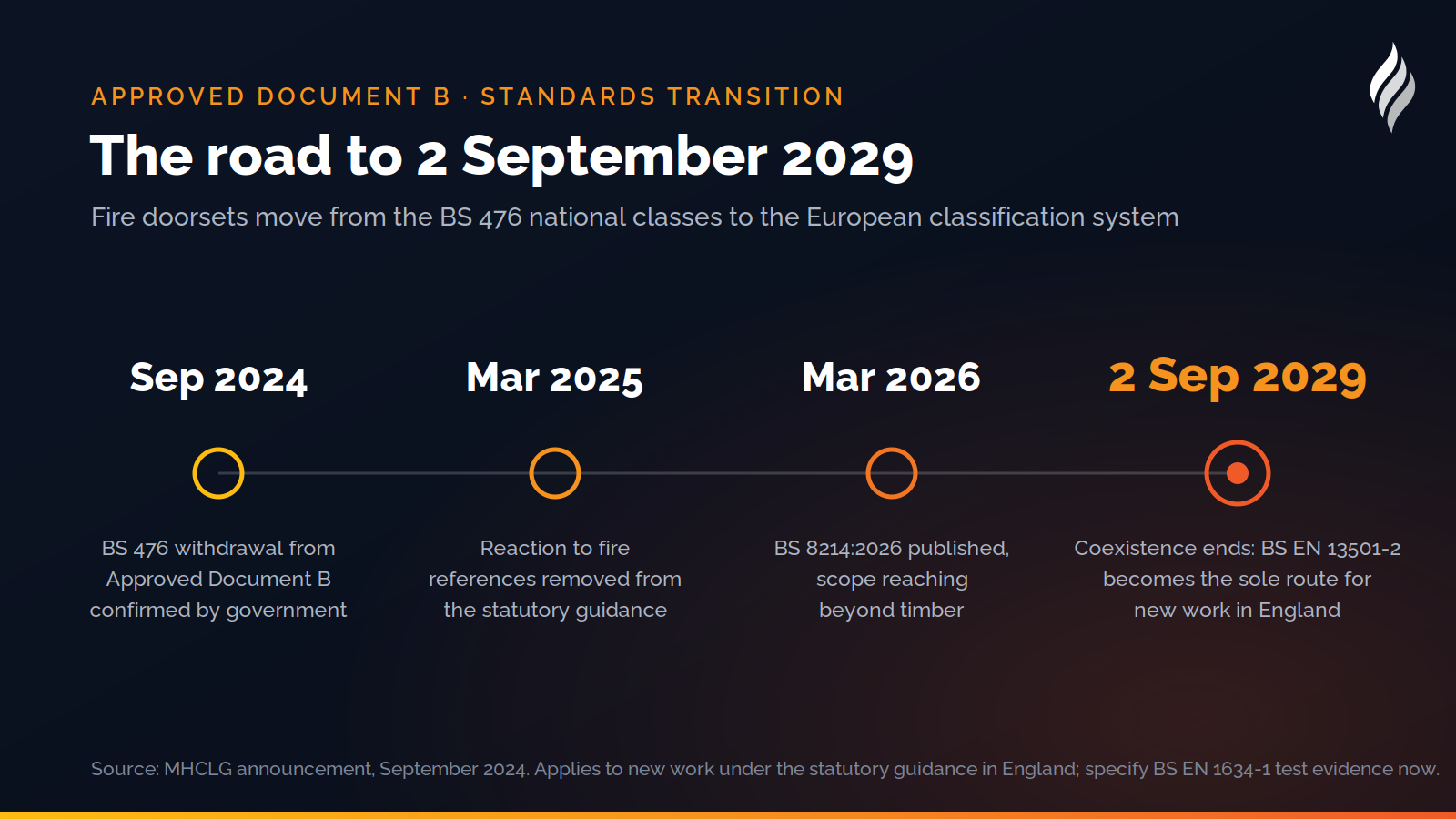
The piece also covers the standards transition now under way. The government confirmed in September 2024 that the BS 476 national classes are being withdrawn from Approved Document B, with references to the reaction to fire tests removed in March 2025. The coexistence period for fire resistance ends on 2 September 2029, after which BS EN 13501 classifications based on BS EN 1634-1 testing become the sole route in the statutory guidance for new work in England. A doorset specified today on legacy evidence alone will spend most of its service life resting on withdrawn paperwork. The revised code of practice for fire door assemblies, BS 8214:2026, published in March 2026 with a scope reaching beyond timber, belongs in the specification too.
From there the article follows the evidence to handover: Regulation 38, the golden thread for higher-risk buildings, and why a handover pack organised per doorset, not per project, is what keeps a compliant door provable in year seven.
About Public Sector Build Journal
PSBJ is a leading title for the public sector built environment, read by architects, contractors, local authorities and heads of site making specification decisions across schools, hospitals, housing and civic buildings.
Read the full piece
The article is live now: Specifying a Fire Door That Stays Compliant.
How DoorTRACE helps
Specification evidence only works if it survives the building's life. DoorTRACE gives every door a unique digital record holding its certification, installation details and inspection history, so the golden thread starts at handover instead of being rebuilt years later. See how our platform keeps the paper trail attached to the door, or get in touch to see it working on your stock.
Approved Document B: the second staircase era starts today
The amendments to Approved Document B come into force today: more than one common stair in new blocks of flats with a storey 18m or more, evacuation shafts to support evacuation lifts, and new escape guidance. What changes, who it touches, and the fire door angle.
Remedial work is now free to record on DoorTRACE
Only inspections are charged on Pay-As-You-Go from now on. The form that closes out remedial work joins registrations and reports on the free list, so the cost of a door for the year is known before it starts.
Fire doors in warehouses and industrial units
An open warehouse floor resists traditional compartmentation, so its fire doors concentrate around the edges and take the hardest knocks in any sector. Where the doors are, the fork-lift problem, and a check regime for a hard-wearing site.