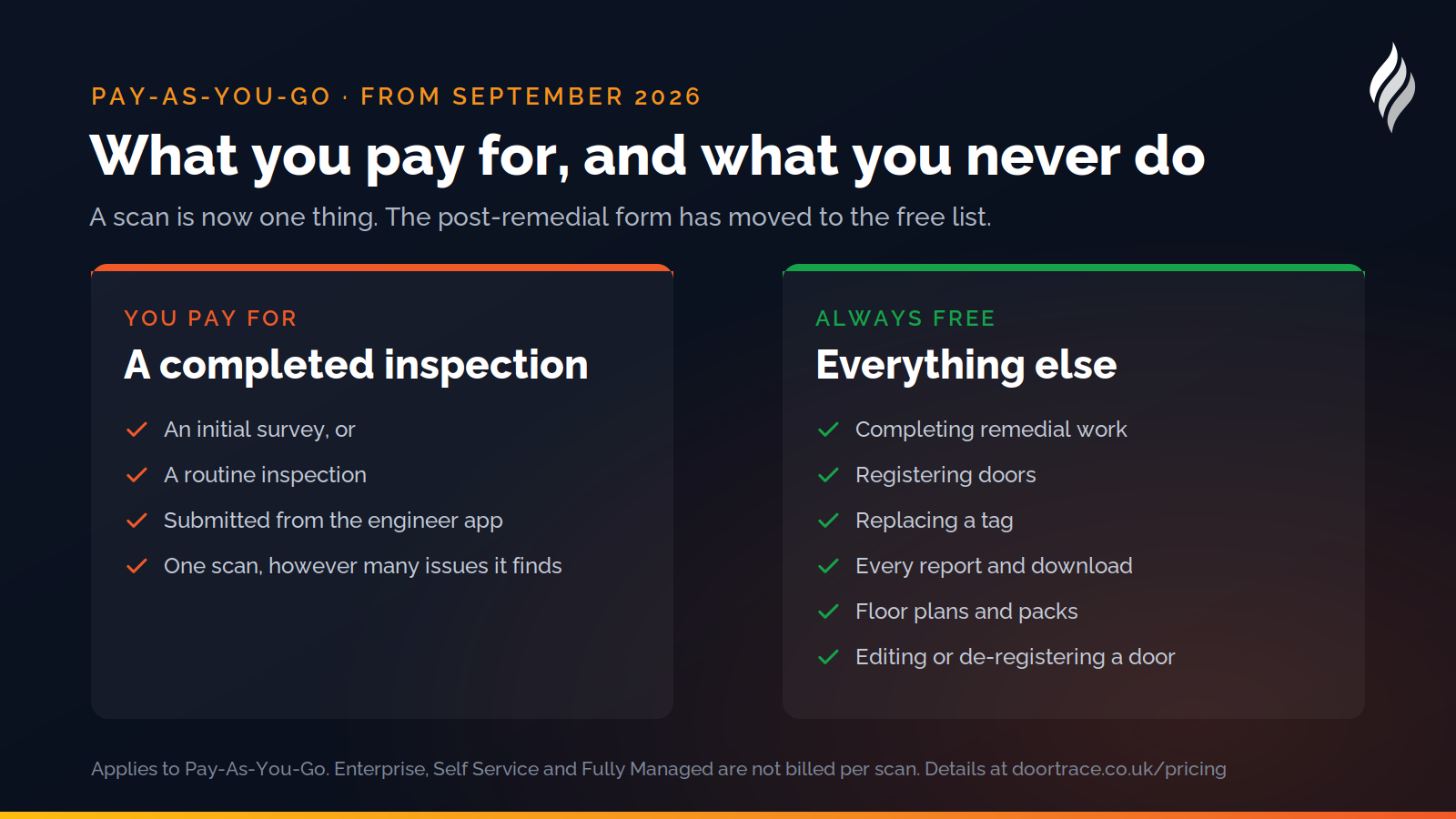
From September 2026, DoorTRACE charges for one thing on Pay-As-You-Go: a completed inspection. The post-remedial form, the signed record an engineer completes when a defect has been put right, is no longer a billable scan. It joins registering doors, replacing tags and every report on the list of things that cost nothing.
This article explains what changed, why we did it, and what it means for the price of a door across a year.
What changed
Until now a Pay-As-You-Go scan was one of two things: a completed inspection, or a completed post-remedial form. That second one has gone. A scan is now a completed initial survey or a completed routine inspection, submitted from the engineer app, and nothing else.
Nothing has changed in the app or the portal. Engineers still complete the post-remedial form at the door, with before and after photos and a signature, and that form is still the only thing that closes a defect. The Usage page in the portal still shows post-remedial forms in their own column, so the work is on record. It simply no longer adds to the Billable figure.
Forms completed before September 2026 were billable at the time and stay as they were invoiced. The change applies from this month's figures onwards, so the next monthly usage summary already reflects it.
Why we did it
An inspection is planned work. You know the doors, you know the frequency, so you know how many inspections a building needs in a year before the year begins. Remedial work is the opposite: nobody can say in January how many doors will fail in June or how many visits the repairs will take. Charging for the fix meant the one part of the bill you could not plan for was also the one that grew whenever a building had a bad quarter.
We would rather the bill followed the plan. Charging for inspections only means the number you budget is the number you pay, and a run of repairs after a poor inspection never changes it. It also removes any reason to hesitate over closing a defect properly: the signed form with its photographs costs nothing, so there is no trade-off between good records and a lower bill.
What a door costs for the year
Because only inspections are charged, every door has a known cost before the year starts. A communal door checked quarterly under Regulation 10 is four scans a year, and that is the whole bill for that door. A flat entrance door checked annually is one. Extra reports for an audit, a floor plan pack, a replacement tag or three remedial visits after a failed check never move that number.
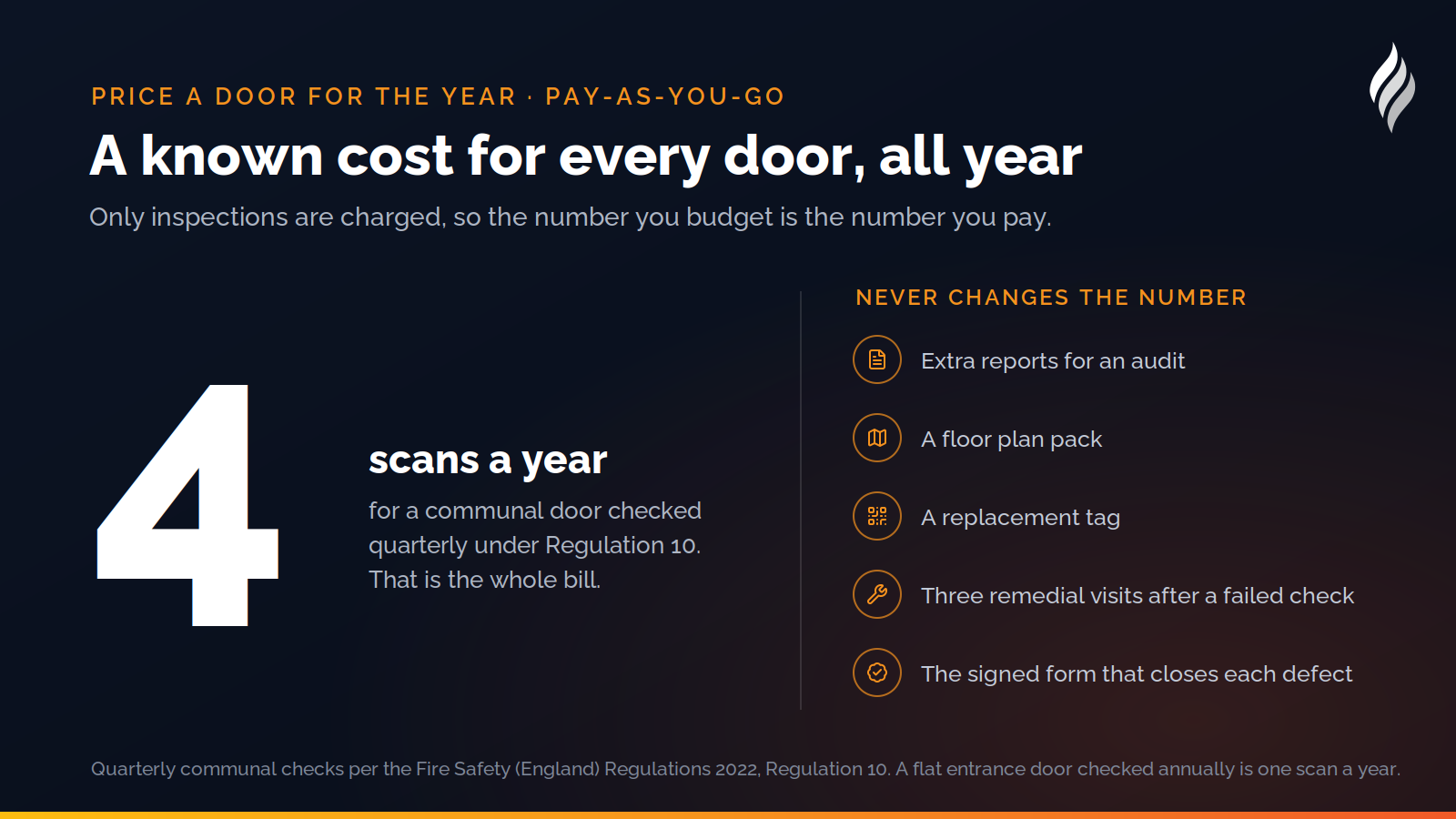
Our other plans were never billed per scan, so nothing changes for Enterprise, Self Service or Fully Managed customers. The full breakdown of what is charged and what is free is on the pricing page.
How DoorTRACE helps
DoorTRACE records every inspection, defect and repair against the door it belongs to, with the post-remedial form closing the loop on each fix. With remedial work free to record, the full defect workflow costs nothing beyond the inspections that found the problems, and the engineer app captures the evidence at the door. If you want to know what your buildings would cost for a year, get in touch and we will work it through with you.
Approved Document B: the second staircase era starts today
The amendments to Approved Document B come into force today: more than one common stair in new blocks of flats with a storey 18m or more, evacuation shafts to support evacuation lifts, and new escape guidance. What changes, who it touches, and the fire door angle.
Fire doors in warehouses and industrial units
An open warehouse floor resists traditional compartmentation, so its fire doors concentrate around the edges and take the hardest knocks in any sector. Where the doors are, the fork-lift problem, and a check regime for a hard-wearing site.
After Fire Door Safety Week: the year-round programme
Day five of Fire Door Safety Week, and the campaign ends this afternoon. The doors stay. Here is how to convert a week of attention into a programme that runs the other 51 weeks: rhythm, ownership, a live reporting route and evidence that accumulates.